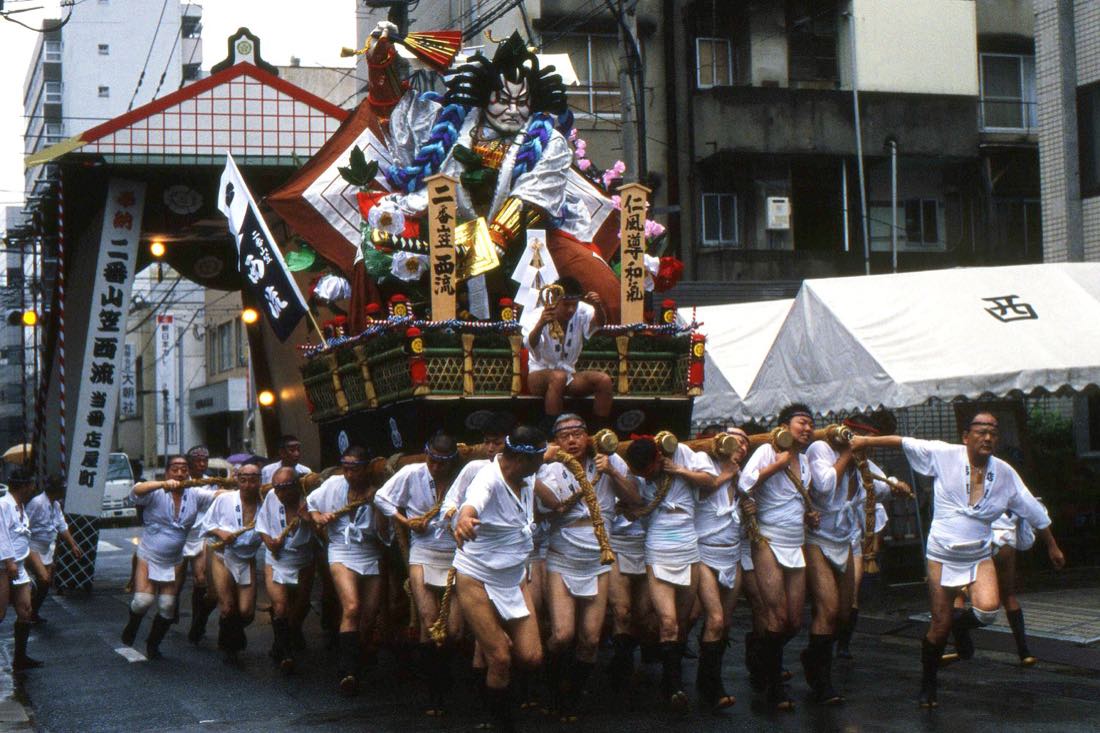
The 4:59am festival —
and the nights that sell out first.
Fukuoka's calendar is genuinely front-rank — a UNESCO-listed float race at dawn, one of Japan's biggest street festivals, grand sumo in its smallest venue. Each one also detonates hotel availability. Dates, practicalities and the booking ladder, below.
Three events shape a Fukuoka year. Hakata Gion Yamakasa runs 1–15 July, ending with the Oiyama race at 4:59am on the 15th — one-tonne floats, seven teams, over in half an hour; book that hotel six months out. Hakata Dontaku (3–4 May) drops 2 million-plus people into Golden Week, the worst hotel window of the Japanese year. The Kyushu Basho sumo runs 8–22 November 2026 with weekday chair seats around ¥3,500 (~$23). Around them: Tamaseseri on 3 January, Hōjōya 12–18 September, Christmas markets from 1 November — and no, the Ohori fireworks aren't coming back; they ended in 2018.
When Hakata's hotels actually run out
The sellout ladderFukuoka normally has generous hotel supply — these are the windows that break it, ordered by how far ahead the beds go. Rates spike before rooms vanish; both count as selling out.
Yamakasa: 15 days of build-up, 30 minutes of race
The big oneUNESCO-listed, 700-odd years old, and the thing Hakata organises its summer around.
From 1 July the kazariyama — ten-metre decorative floats — go on display across the city, free, all day. The fortnight escalates through practice runs to the Oiyama: 4:59am on 15 July, seven neighbourhood teams racing one-tonne kakiyama floats (built without nails) from Kushida Shrine through the old town, thousands of men in fundoshi, spectators throwing water, the whole thing over in roughly 30 minutes. Participants famously abstain from cucumber for the fortnight — the cut cross-section resembles the shrine crest — and yes, that rule is real.
Practicalities: JR, Nishitetsu and the subway all run special early services on the 15th, so you don't need to stay up all night — but check the special timetable, be at Kushida well before 04:00, and expect July's heat and rain (the race runs in both). Can't do 4:59am? The kazariyama displays from 1 July are the accessible version, and the permanent float inside Kushida Shrine works year-round.
Fukuoka's year, event by event
The calendarDates verified August 2026; the movable ones say so.
| When | Event | What it is | Verdict |
|---|---|---|---|
| 3 Jan | Tamaseseri, Hakozaki Shrine | Two teams wrestle for a sacred ball — land or sea omen for the year | WORTH IT |
| 3 Feb | Setsubun, Kushida Shrine | Bean-throwing; Japan's largest otafuku mask gate to walk through | DEPENDS |
| Late Mar–early Apr | Sakura | Maizuru Park illuminations; full bloom ~28–29 Mar | WORTH IT |
| 3–4 May | Hakata Dontaku | 2M+ spectators, 30,000 paraders with rice paddles — inside Golden Week | DEPENDS |
| 1–15 Jul | Hakata Gion Yamakasa | UNESCO float race; Oiyama 4:59am on the 15th | WORTH IT |
| 12–18 Sep | Hōjōya, Hakozaki Shrine | Seven days of festival stalls; one of Hakata's big three | WORTH IT |
| 8–22 Nov 2026 | Kyushu Basho sumo | Grand sumo in its smallest, most intimate venue | WORTH IT |
| 1 Nov–25 Dec | Christmas markets | Among Japan's biggest — Hakata Station square from 1 Nov, ¥1,500 collectible mugs | WORTH IT |
| Mar–Oct | SoftBank Hawks baseball | The 2025 Japan Series champions, most nights at the dome | WORTH IT |
Hōjōya sits in peak typhoon month and has been weather-curtailed before — hold plans loosely. Access for both Hakozaki Shrine events: Hakozaki-Miyamae station on the subway's Hakozaki line.
The fireworks that ended in 2018 — and what to do instead
The misinformation fileThe Ohori Park fireworks festival ended with its 2018 edition, discontinued on safety grounds after crowds passed 450,000 — yet English-language sites still list it, some with invented 2026 dates. There is no major fireworks display inside Fukuoka city. The real ones are a short ride out: Kurume's Chikugo River Fireworks (5 August 2026, Kyushu's largest at ~18,000 shells, ~40 minutes by train), and the Kanmon Strait display fired from both shores at once (13 August 2026, via Mojiko).
While we're correcting the record: the elite Fukuoka International Marathon was discontinued in 2021 and replaced by a successor race each early December, while the separate mass-participation Fukuoka Marathon runs in November and closes the Itoshima coast road for a day. Almost every English page conflates the two.
The festival questions everyone asks
FAQPage schema pairedIs Yamakasa worth planning a trip around?
Yes, if you accept the terms: mid-July heat, festival-inflated hotel rates, and a 4:00am start for the main event on 15 July. The payoff is Japan's most electric 30 minutes — one-tonne floats at a sprint through wet streets. The free kazariyama displays run from 1 July for anyone who won't do dawn.
What time does the Oiyama start, and how do I get there?
4:59am on 15 July, from Kushida Shrine — and the transit system genuinely runs special pre-dawn services that morning on JR, Nishitetsu and the subway. Be in position before 04:00; the first and loudest stretch is around the shrine. Sleep central the night of the 14th, booked months ahead.
Why can't Yamakasa participants eat cucumber?
Because a cut cucumber's cross-section resembles the crest of the festival's Gion deity — participants abstain for the festival fortnight, 1–14 July, per the official festival guide. The crest explanation is tradition rather than documented history, but the abstention itself is real and observed.
Is Dontaku worth braving Golden Week for?
Only if festivals are the point of your trip. It's one of Japan's largest — two days, 2 million-plus people, parade troupes clacking rice paddles down Meiji-dōri — but it sits inside the year's worst travel window, with hotels booked 6–9 months out. For most travellers, May 6th onward is the better Fukuoka.
How do I get sumo tickets for the Kyushu Basho?
Through Ticket Ōsumo (sumo.pia.jp, English interface), several weeks ahead — weekdays are far easier than weekends and the final Sunday goes first. A weekday Chair B seat runs about ¥3,500 (~$23); arrive around 14:00 for the top divisions. Full walkthrough: sumo in Fukuoka.
Are the Christmas markets actually good?
Genuinely — Fukuoka's 'Christmas Advent' spreads a dozen venues and ranks among Japan's biggest German-style markets, with the Hakata Station square running 1 November to 25 December and collectible ¥1,500 venue mugs. Opening on 1 November means November stacks foliage, sumo and markets — the strongest single-month case in the city's year.
Is there a fireworks festival in Fukuoka?
Not in the city — the Ohori Park festival ended in 2018 and hasn't returned, despite stale listings claiming otherwise. In 2026 the regional ones worth a train ride are Kurume's Chikugo River display (5 August) and the two-sided Kanmon Strait show at Moji/Shimonoseki (13 August).