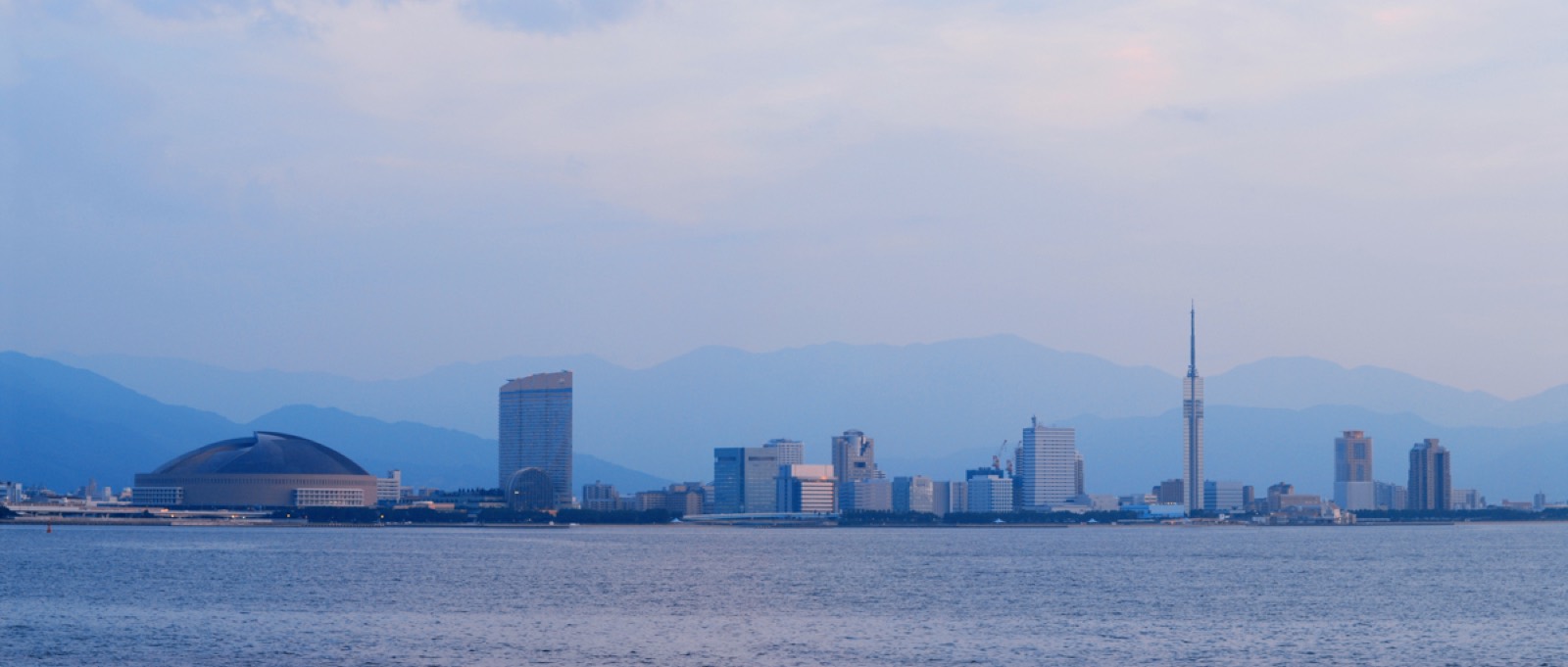
Everything worth doing in Fukuoka
— and what to skip.
Fukuoka's best things to do cost almost nothing: the temple circuit is 3.5 km and ¥650 (~$4.35) in total admissions, the city's #1-rated attraction is a free park, a 1st-century national treasure costs ¥200 (~$1.35) to see, and the best night out is a SoftBank Hawks game from about ¥3,670 (~$24.49). Below: every sight ranked with a straight verdict — and the famous names, the Tower and Canal City, honestly filed under 'spare hour'.
The city with no monument — and why that's the brief
Read this firstFukuoka gets skipped because it has no Fushimi Inari, no Dome, no castle keep. That's exactly why it works.
Fukuoka has no marquee monument, and the review data is blunt about it: TripAdvisor's #1 attraction here is a park, #4 is an underground shopping mall, and #6 is the train station. That is not a failure — it's the brief. You come to Fukuoka to eat at the source (tonkotsu ramen, motsunabe, yatai counters at midnight), to feel a young, walkable city, and to use the best-connected base in Kyushu. Plan it as a food-and-base city and it over-delivers; hunt monuments and you'll be gone by noon.
The review data backs the ranking below, not the brochures: Fukuoka Tower sits at 3.9 on TripAdvisor — below the park, the shrine and the train station — the castle ruins at 3.7, and japan-guide's most-visited Fukuoka attraction is Canal City at 3.1 from 1,536 reviews. Meanwhile the temple district stays genuinely quiet, and the gold seal — the object that puts Japan into written history — draws a few hundred reviews a decade. The gap between famous and good is wider here than in any city we cover.
Honest yatai numbers: the stalls average 3.5/5 across ~757 reviews, and Nishinippon Shimbun — the local paper — ran an investigation headlined 'Are there rip-off yatai?', concluding the tourist-facing Nakasu riverside row is where the price complaints live. Official average spend is ¥1,923 (~$13). The fix is simple: favour the Tenjin and Nagahama stalls over the Nakasu postcard row, ask prices before ordering, carry cash, expect a one-drink minimum, and don't camp the seat — it's a counter, not a restaurant.
Fukuoka's crowds don't follow Japan's national pattern: over half its foreign visitors are Korean weekenders, with Taiwan next — this is Asia's short-break city, not a Western tour-bus stop. Practical consequence: weekends and Korean holidays are the crush; Western-peak months matter less than you'd think.
Fukuoka's whole pitch, in five figures
The numbersAll 17, ranked by what you get for your time
The rankingA SoftBank Hawks game
The strongest recommendation on this site: the 2025 Japan Series champions, a domed stadium, and the loudest crowd in Japanese sport. Better than any monument Fukuoka doesn't have.
The Hakata temple walk
Eight sights, one flat circuit, ¥650 in total admissions — Japan's first Zen temple, a giant Buddha, the udon origin stone. The best half-day in the city and almost nobody packages it.
A yatai night, done right
Fukuoka's icon averages 3.5/5 because tourists default to the priciest row. Tenjin and Nagahama stalls, prices asked up front, cash in pocket — then it earns its reputation.
Ohori Park
The city's #1-rated attraction is a park with a 2 km pond loop. Go at dawn and you'll understand why nobody here is embarrassed about that.
Fukuoka City Museum — the gold seal
A 2.3 cm gold seal from 57 AD — the earliest physical evidence of Japan in the written record — for ¥200, in a museum most visitors never hear about.
Kushida Shrine
Hakata's guardian shrine, a 10-metre festival float on display eleven months a year, and a thousand-year-old ginkgo. The highest-rated true sight in the city.
Tochoji
Japan's largest seated wooden Buddha and a pitch-black hell walk, one minute from Gion Station. The best ¥50 in Japan.
Kyushu Basho sumo
For 15 days each November, Fukuoka has an unambiguous world-class event — and it's historically the easiest tournament in Japan to get tickets for.
Fukuoka Asian Art Museum
The only museum in the world dedicated to modern and contemporary Asian art, freshly renovated in April 2026, subway-connected and nearly empty.
teamLab Forest
Open — permanently, despite the persistent rumour. Excellent for families and rainy days; smaller than Tokyo's teamLabs, so repeat visitors can calibrate.
Uminonakamichi & Marine World
A 300-hectare seaside park with rental bikes, spring nemophila and a shark-heavy aquarium — the best full family day inside city limits. Arrive by ferry.
ACROS step garden
A 60-metre forested staircase grafted onto an office block. Free, odd, photogenic — and the summit deck opens weekends only, which no guide tells you.
Fukuoka Castle ruins
There is no castle at Fukuoka Castle — walls and turrets only. Free, superb during sakura, and the keep platform is the best free view in the centre. Know that going in.
Nokonoshima, Ainoshima & Shikanoshima
Flower fields, a cat island and the gold seal's discovery site, all on cheap municipal ferries. Timed right they're lovely; timed wrong they're a long ride to a green hill.
The Open Top Bus
Three fixed loops — not hop-on-hop-off, which Fukuoka doesn't have. Good on a first day or at night; ¥2,000 also buys every temple-circuit admission three times over.
Fukuoka Tower
The brochure icon rates 3.9 — below the train station. At sunset with an online ticket it's a fine hour; at noon at the gate it's the weakest ¥1,000 in town.
Canal City
The most-visited attraction in Fukuoka rates 3.1. Walk through for the free fountain show and a Ramen Stadium bowl — don't plan a day around it.
Bookable Fukuoka tours right now
Live availabilityThings to do in Fukuoka, answered
FAQPage schema pairedIs Fukuoka worth visiting?
Yes — as a food, atmosphere and base city, not a sightseeing city. The honest math: two days covers every in-city highlight for under ¥1,500 in admissions, and the eating is the best-value in urban Japan. The full argument, including who should skip it: is Fukuoka worth it?
What is Fukuoka actually known for?
Food first: tonkotsu ramen at its source, motsunabe, mentaiko, Japan's highest yakitori density (1,412 shops), and the yatai stalls. After that: a Hawks baseball night, November sumo, and being the front door to Kyushu — the airport is five minutes from the main station.
Is 2 days enough for Fukuoka?
For the city itself, yes — temple circuit and a museum on day one, Ohori Park and a yatai night on day two. Add a day per day trip after that. The runbook: 2 days in Fukuoka; the reframe on trip length: how many nights.
What's the single best thing to do?
A SoftBank Hawks game — the 2025 Japan Series champions, tickets from about ¥3,670 (~$24.49), domed against rain. If the schedule doesn't cooperate, the temple circuit at ¥650 is the best daytime half-day. Both beat every observation deck in town.
What should I skip?
The Fukuoka Tourist City Pass (¥2,500 for about ¥1,440 of real fares), Fukuoka Tower outside the sunset window, and planning a day around Canal City. Fuller list with the reasoning: overrated and underrated.
What do I do in Fukuoka when it rains?
Fukuoka is unusually good in the rain: three ¥200-ish museums, teamLab Forest, the Tenjin underground city, Canal City's fountain show, and a domed baseball stadium. The wet-day playbook: rainy-day Fukuoka.
I've done Tokyo, Kyoto and Osaka — will Fukuoka feel thin?
It'll feel different, which is the point: no queues, no marquee sights to tick, and food that beats all three cities on price. Repeat-Japan visitors are exactly who Fukuoka rewards — start with the food case and the quiet temple district, then day-trip: ranked day trips.