The yatai, done right —
without the tourist price.
Fukuoka's icon averages 3.5/5 — because most visitors sit in the wrong row and order blind. Five rules, three clusters, one fair-bill benchmark, and you'll eat the version locals defend.
Go to the Tenjin or Nagahama stalls, not the Nakasu riverside postcard row. Only sit where prices are displayed, ask before ordering anything off-menu, and carry ¥1,000 notes — every stall is cash-only. Expect a one-drink minimum, order food with it, and don't camp the seat: 7–10 stools, no reservations, no toilets. A fair night is ¥2,000–4,000 (~$13–27) at one stall, ¥4,000–6,000 (~$27–40) for a crawl; the official average spend is ¥1,923 (~$13). Stalls run roughly 18:00–02:00 and close in rain — always have a plan B.
Why the city's icon scores 3.5 out of 5
The honest numbersStart with the uncomfortable data, because it's also the fix.
Honest yatai numbers: the stalls average 3.5/5 across ~757 reviews, and Nishinippon Shimbun — the local paper — ran an investigation headlined 'Are there rip-off yatai?', concluding the tourist-facing Nakasu riverside row is where the price complaints live. Official average spend is ¥1,923 (~$13). The fix is simple: favour the Tenjin and Nagahama stalls over the Nakasu postcard row, ask prices before ordering, carry cash, expect a one-drink minimum, and don't camp the seat — it's a counter, not a restaurant.
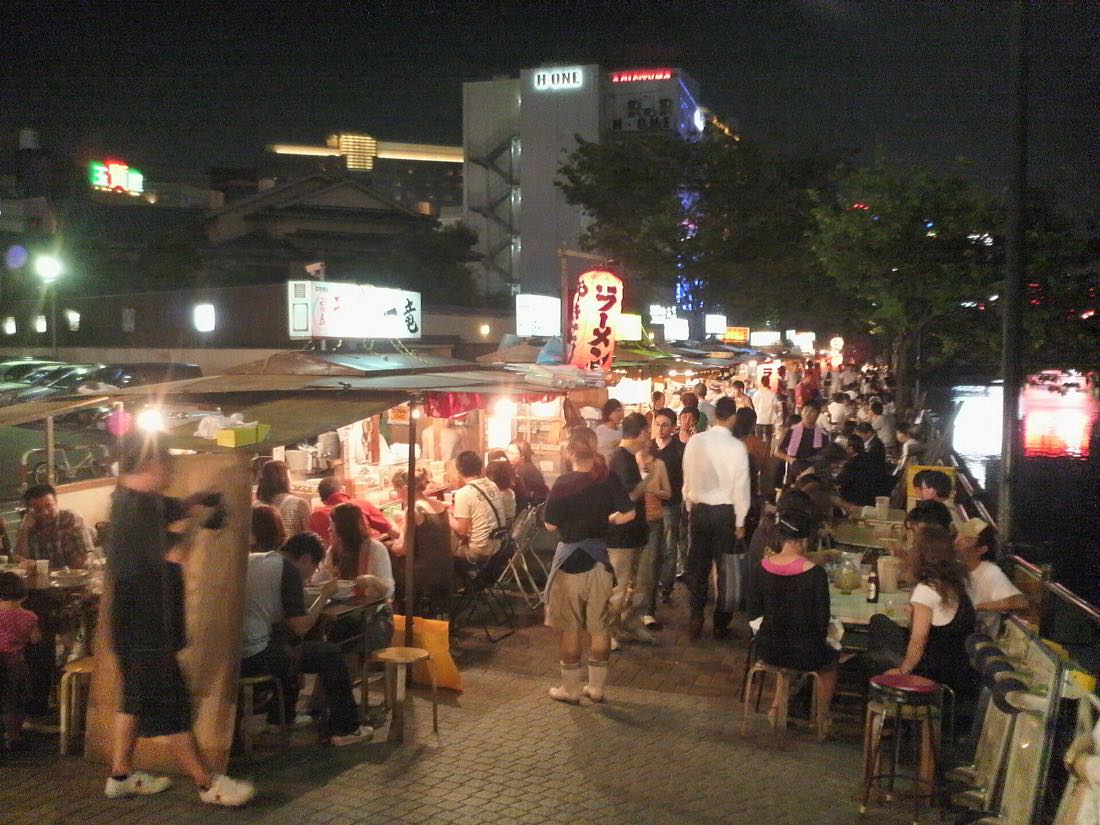
What the complaints actually describe is one row: the Nakasu riverside, where the neon-on-water photograph lives and where reported prices run 10–20% above the other clusters, with 20–45 minute weekend waits. The recurring failure pattern in the bad reviews is always the same — no displayed prices, off-menu seafood ordered by pointing, then a handwritten bill in Japanese that nobody can check. One party reported ¥12,000 (~$80) for four people and left half full. Every part of that is avoidable, and avoiding it is this page.
The other thing the averages hide: the scene is being renewed, not dying. Fukuoka is the only city in Japan with a yatai ordinance and public licensing rounds, and by 2023 over 40% of all stalls were post-2016 businesses recruited through it — including a French stall and wine yatai. The city ran its sixth recruitment round in 2026: 23 new pitches across Nakasu North, Seiryu Park, Tenjin and Nagahama, applications closed 8 June 2026, with the winners trading from April–May 2027. Expect roughly two dozen brand-new stalls next spring — a fact almost no English guide has yet.
The five rules that prevent the tourist price
The playbookThese come from the local paper's own investigation and the review record — not vibes-based etiquette lists.
Only sit at a stall with a visible price list. This one rule eliminates nearly every reported incident. No prices means you've volunteered for the surprise bill.
The anti-rip-off phrase: o-nedan wa ikura desu ka — how much is it?Seafood and grilled beef are where the bad bills come from. If it isn't on the list, get a number before it hits the grill.
Bills are handwritten in Japanese and rarely itemised for you. Keep a rough running total; query politely if the number doesn't match it.
Same food, same steam, lower prices, more locals. Want the riverside photo? Take it from the bank, then walk ten minutes and eat in Tenjin.
A drink plus a dish per person is the effective seat charge; skewers usually come two-plus per order. Finish, pay, free the stool — it's a counter, not a restaurant. Groups over four rarely sit together; two is ideal.
Where the stalls actually are — and which row is yours
The three clusters| Cluster | Character | Typical spend | Verdict |
|---|---|---|---|
| Tenjin (Watanabe-dori / Kego) | Pavement stalls in the business district — locals-heavy, 10–20 min waits | ¥1,500–2,500 (~$10–17) | WORTH IT |
| Nagahama | The quiet ramen-origin cluster by the old fish market; talk-to-the-owner territory | ¥1,500–3,000 (~$10–20) | WORTH IT |
| Nakasu riverside | The postcard row — neon on water, tourist-dense, 20–45 min weekend waits, 10–20% dearer | ¥2,000–3,500 (~$13–23) | DEPENDS |
Nakasu isn't a scam zone — it's a premium-for-the-view zone wrapped around a working nightlife island. What that means for your evening (and your hotel choice) is handled plainly on the Nakasu page.
When to take your stool
The night, hour by hourStalls open around 18:00–19:00 and wheel away by 02:00. The sweet spots are the first hour and the post-dinner lull.
The good hour: everything's lit, the salaryman queue tells you which stall is worth it.
How a yatai night actually works
The mechanicsThe money part
Cash, plainlyCards and contactless work fine in Fukuoka's stations, malls, konbini and restaurants — the subway gates even take foreign contactless cards directly. The cash line is drawn exactly where you want to eat: yatai are cash-only, and so are some ramen counters and market stalls. Carry ¥5,000–10,000 in cash for a food night and you're covered.
Budget honestly and the night is cheap by any standard: one stall costs ¥2,000–4,000 (~$13–27) a head, a two-or-three-stall crawl ¥4,000–6,000 (~$27–40) — and remember you're paying for an experience, not calories. A ¥700 ramen shop feeds you better per yen; nothing else in Japan feeds you like a steamed counter with seven strangers. Full money logistics: money in Fukuoka.
A guide solves the four genuine failure modes — no reservations, cash-only handwritten bills, no English menus, weather closures. The same 2–3-hour crawl sells anywhere from $70 to $255, and the spread is the story: the comparison table, the price-per-hour maths and the honest case both ways.
Yatai tours, comparedYatai, answered
FAQPage schema pairedWhere do I find the yatai stalls?
Three clusters: Tenjin (pavements around Watanabe-dori and Kego, the best first-timer pick), Nagahama (near the old fish market, quietest, ramen heritage), and the Nakasu riverside row (the famous photo, the highest prices). All three are walkable from Hakata, Tenjin, Nakasu or Haruyoshi hotels — part of why where you sleep matters.
Are yatai open on Sundays?
Some are, many aren't — Sunday is the most common weekly day off, but each stall picks its own, and irregular closures are normal. The city posts same-day opening status from around 18:00; check it rather than trusting any printed schedule, including ours.
Do I need to speak Japanese?
No. Pointing, a smile, and o-nedan wa ikura desu ka ('how much is it?') cover 95% of the night. Tourist-facing stalls often have picture menus. The warning sign isn't the absence of English — it's the absence of any price list at all.
Is there a cover charge?
Not formally, but the one-drink-plus-one-dish minimum per person works as one — call it ¥800–1,000 (~$5.30–6.70) before you've eaten anything you chose. That's normal and fair; it keeps a seven-stool business alive. The otoshi seat-charge snack you'll meet at izakaya (¥300–500) doesn't apply at stalls.
What should I actually order?
The classics: yaki-ramen (invented at the Tenjin stall Kokinchan), oden in winter, gyoza, skewers, and whatever the handwritten special is once you've asked its price. One genuinely good rule: order what the regular next to you is having — the salaryman at 7pm has done this before.
Are yatai OK with kids?
Mostly no, honestly: no toilets, 7–10 stools, smoke, alcohol, an 18:00+ start and a turnover culture that punishes slow eaters. Take the family to Ramen Stadium (indoor, seats, toilets, mini bowls) and do the yatai as a couple another night — or split shifts.
What if it rains?
The stalls simply don't open — they're wheeled out and built each evening, so weather closure is total, not partial. Have the backup ready: Ramen Stadium, a motsunabe booking, or the izakaya lanes of Haruyoshi. More wet-night ideas: rainy-day Fukuoka.
Do I tip?
No — Japan doesn't tip, and yatai are no exception. Pay the bill, say gochisosama, free the stool. The owner's reward is the queue behind you.