October and November.
Everything else is a trade.
Fukuoka has real seasons and honest trade-offs: a rainy season that means it, an August that doesn't cool down at night, a sakura front that peaks before Tokyo's, and two autumn months that get everything right at once. Here's all twelve, called plainly.
Go in October or November. October is Fukuoka's driest, mildest month — 23°C, 95 mm of rain, only 8 rain days — and November adds late foliage, the Kyushu Basho sumo (8–22 November 2026) and Christmas markets from 1 November. Second choice: late March to April for sakura, which peaks around 28–29 March, earlier than Tokyo. The value play is January–February: mild by Japanese standards, the cheapest hotels, and oyster-hut and hotpot season — the most Fukuoka-specific eating of the year. Avoid August (32°C, 74% humidity, nights stuck at 25°C) and early September's typhoon peak.
Twelve months, twelve verdicts
The whole yearClimate normals for Fukuoka city; bar shows relative crowds. Festival dates are on the events page.
August isn't 'hot but doable' — it's a coastal basin that doesn't cool at night, and 11:00–16:00 outdoor sightseeing is genuinely a mistake. If you're locked into it, plan indoor middles: teamLab, the museums, Tenjin's underground arcade.
Fukuoka's crowds don't follow the Western calendar
The crowd patternFukuoka's crowds don't follow Japan's national pattern: over half its foreign visitors are Korean weekenders, with Taiwan next — this is Asia's short-break city, not a Western tour-bus stop. Practical consequence: weekends and Korean holidays are the crush; Western-peak months matter less than you'd think.
What that means in practice: a Tuesday in October can be quieter than a Saturday in February, because the crowd engine here is the short-break flight from Seoul, Busan and Taipei, not the long-haul European summer. Book weekend hotels earlier than weekday ones year-round, and treat Korean holiday clusters — Seollal (Lunar New Year) and Chuseok in late September–early October — as extra high-demand windows no Western guide flags.
The domestic crushes are the ones to genuinely plan around: Golden Week (29 April–5 May, containing Dontaku), Obon in mid-August, New Year, and Yamakasa's final days. Hotel sellout dates, laddered: the events page.
Rain, typhoons and the season nobody sells
The honest downsidesThe rainy season (tsuyu) runs June into July, and Kyushu is the wettest part of Japan while it lasts — July's 300 mm is triple a London month, and the region has a real history of dangerous rain events. City sightseeing copes fine; rural and mountain day trips (Yufuin, the Aso area) need flexibility. Treat a JMA heavy-rain emergency warning as a stop-everything signal, not advice.
Typhoon season runs June to October, peaking August to early October, and Kyushu is the most typhoon-exposed major region of Japan. The failure order is consistent: ferries cancel first, flights next, shinkansen run planned suspensions, the subway usually keeps going — and the yatai close. If you travel in September, don't put an island ferry or a tight international connection on your last day.
Two smaller seasonal notes: spring brings episodic yellow dust (kōsa) off the continent — pack a mask if you have asthma, check the prefecture's forecast, and don't let it cancel a trip. And winter is the sleeper: oyster huts at Itoshima run October–March, hotpot season peaks, and hotels hit their yearly floor. The best-value months are the ones nobody books.
The when-to-go questions
FAQPage schema pairedWhen is cherry blossom season in Fukuoka?
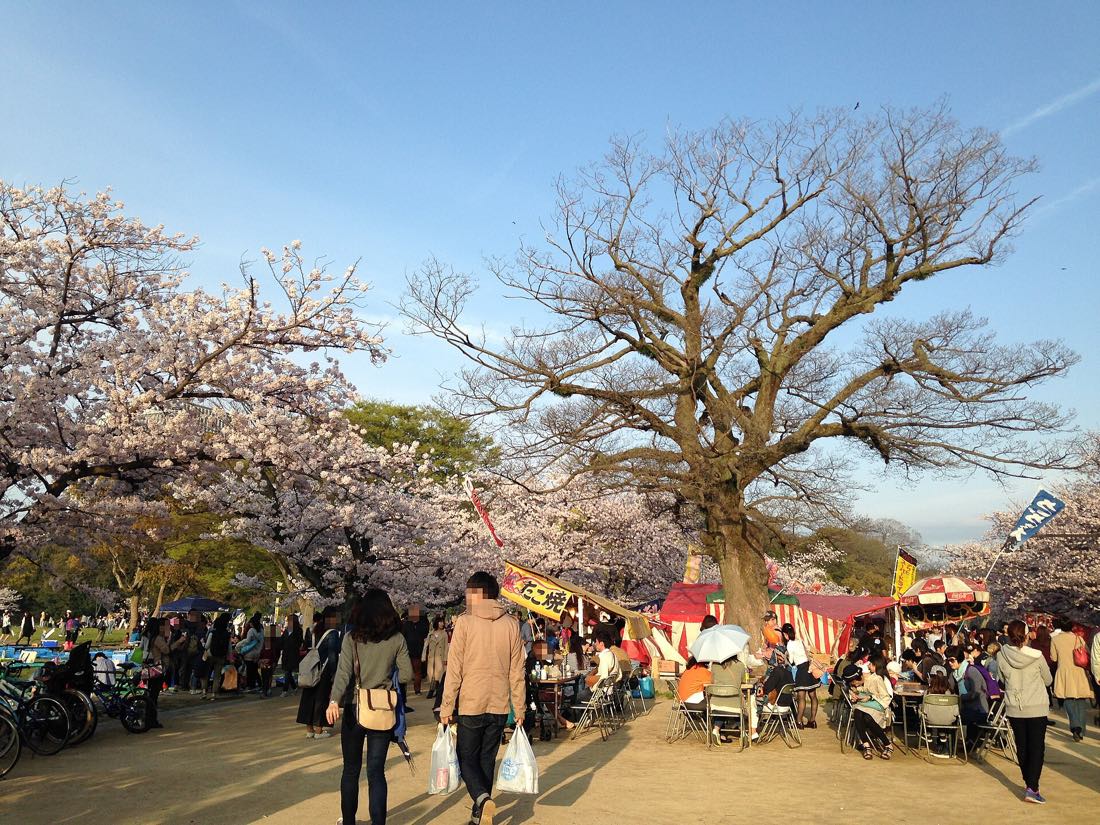
Full bloom averages 28–29 March, with the best viewing running into the first week of April — earlier than Tokyo or Kyoto. The smart itinerary catches Fukuoka's peak first and follows the sakura front north-east. Best spots: Maizuru Park at the castle ruins (~1,000 trees, night illumination) and hilltop Nishi Park.
Does it snow in Fukuoka?
Rarely and lightly — January averages 9.6°C highs, and the odd flurry almost never settles in the city. Winter here is grey and mild rather than white, which is exactly why January–February hotels are the year's cheapest. It's hotpot weather, not snow-boot weather.
Is August really that bad?
Yes. 32.1°C average highs with 74% humidity, and — the part that breaks people — nights averaging 25.1°C, so there's no evening relief. Add opening typhoon season and it's the one month we'd actively reschedule. If you can't: indoor middles, the indoor playbook, and yatai after dark.
When is the rainy season, and should I avoid it?
Tsuyu runs roughly early June into mid-July; June logs 250 mm and July 300 mm — the year's wettest. The city itself stays workable (arcades, museums, ramen), so it's a fine budget window for an urban trip; it's rural day trips that suffer. Yamakasa (1–15 July) runs rain or shine.
When is sumo in Fukuoka?
The Kyushu Basho runs 8–22 November 2026 at the Fukuoka Kokusai Center — the smallest of the six grand-tournament venues at ~7,500 seats, which makes it intimate and quick to sell out. A weekday Chair B ticket is about ¥3,500 (~$23). The buying guide: sumo in Fukuoka.
What's the cheapest time to visit Fukuoka?
January and February, clearly: the lowest hotel rates of the year, February the driest month (70 mm), and the food argument at its strongest — oyster huts, motsunabe and mizutaki are all winter forms. The trade is short days and grey skies. Avoid the New Year week itself, when rates spike.
Do weekends matter more than months here?
More than anywhere else in Japan, arguably — over half of Fukuoka's foreign visitors are Korean, many on two-day weekend breaks, so Friday and Saturday nights carry a premium and the yatai queues double. A Sunday–Thursday stay quietly beats a Friday–Monday one in any month.